
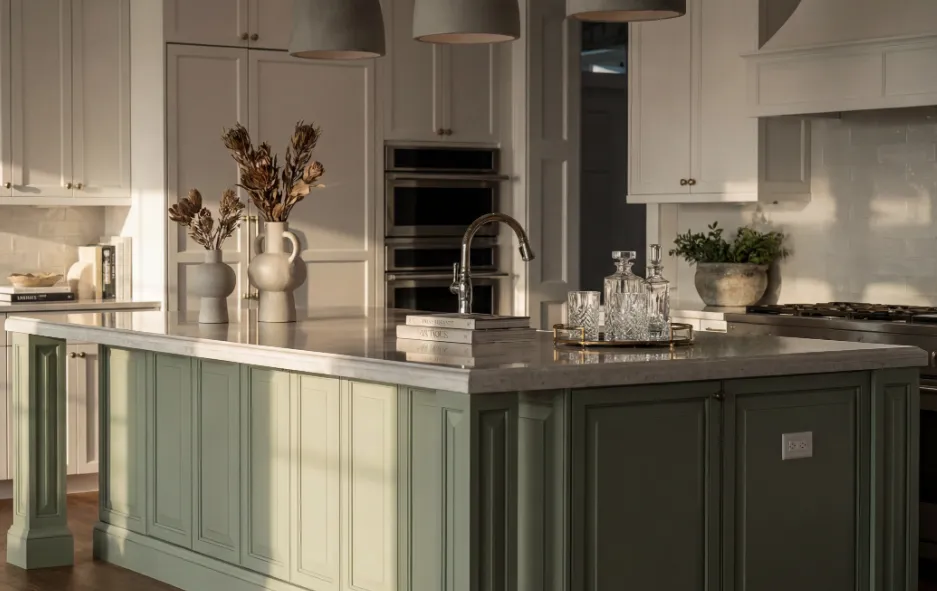
A kitchen can have plenty of cabinets and still feel short on space. The mixer sits on the counter because it is too tall for a shelf. Pan lids slide around. Somewhere behind the bowls is the pot you need tonight.
Good kitchen storage planning starts with what you own and how you use it. Before choosing doors or finishes, list your belongings and measure the awkward pieces.
The French Refinery designs custom cabinetry for Tampa Bay homes. Bringing a clear storage list to the design conversation helps explain what your kitchen needs to do, beyond looking good.
Key Takeaways
- List kitchen items before deciding on storage features.
- Measure handles, lids, and appliance attachments.
- Group belongings by task and frequency of use.
- Check usable interior space, not just cabinet width.
- Leave room to lift items out comfortably.
- Have professionals confirm final cabinet measurements.
What Belongs in a Kitchen Inventory Before Remodeling?
Start with one cupboard. Empty it, look at what is inside, and decide what you actually want to keep. You do not need to finish the entire kitchen in one afternoon.
Sort belongings into groups:
- Pots, pans, lids, and baking dishes
- Plates, bowls, glasses, and serving pieces
- Small appliances and their attachments
- Cooking tools, cutlery, and linens
- Dry food and bulk supplies
- Food containers and matching lids
Mark each group as daily, weekly, or occasional use. The holiday platter needs a home, but perhaps not your easiest drawer.
This part of kitchen storage planning can reveal something useful. You may need better access more than extra cabinets.
How Do You Measure Cookware for Cabinet Storage?
Measure the widest, deepest, and tallest pieces you plan to keep. Include the handles on your biggest skillet and the lid on your tallest pot.
Measure stacks too. Six bowls nested together need a different height than one bowl. A heavy stack might fit, yet still be awkward to lift.
Write down whether you prefer pots stacked or stored separately. For baking tray and cutting board storage, measure the tallest board and widest tray before discussing vertical dividers.
During kitchen storage planning, a photo beside each unusual measurement can help your designer understand the item. Label the measurement clearly so inches and centimeters never get mixed up.

Which Small Appliance Storage Measurements Matter?
Measure each appliance in the position you expect to store it. Include cords, handles, bowls, and any parts that remain attached.
A stand mixer may need more space when its head lifts. A coffee maker may need room above it to refill water. Storage space and operating space are not always the same.
Record these details:
- Appliance make and model
- Width, depth, and stored height
- Space needed for moving parts
- Approximate weight
- Whether it stays out or gets put away
For built-in appliances, provide the current installation instructions. Your designer should use those requirements when coordinating openings and access. Do not assume an appliance can run inside a closed cabinet simply because it fits.
How Do Kitchen Cabinet Storage Zones Help?
Think about a normal meal. Where do you chop vegetables? Where do you reach for oil? Where do clean dishes go after unloading?
Place related items near the task when the layout allows. Prep tools might belong near the main work surface. Plates may work near the dishwasher, provided open doors and drawers do not clash.
Give drinks or snacks their own spot if people often gather while someone cooks. That small change can reduce crowding.
Good kitchen storage planning follows your habits. It does not need to copy a kitchen photo where everything looks tidy but nobody seems to cook.
Cabinet Shelves vs. Drawers: Which Should You Choose?
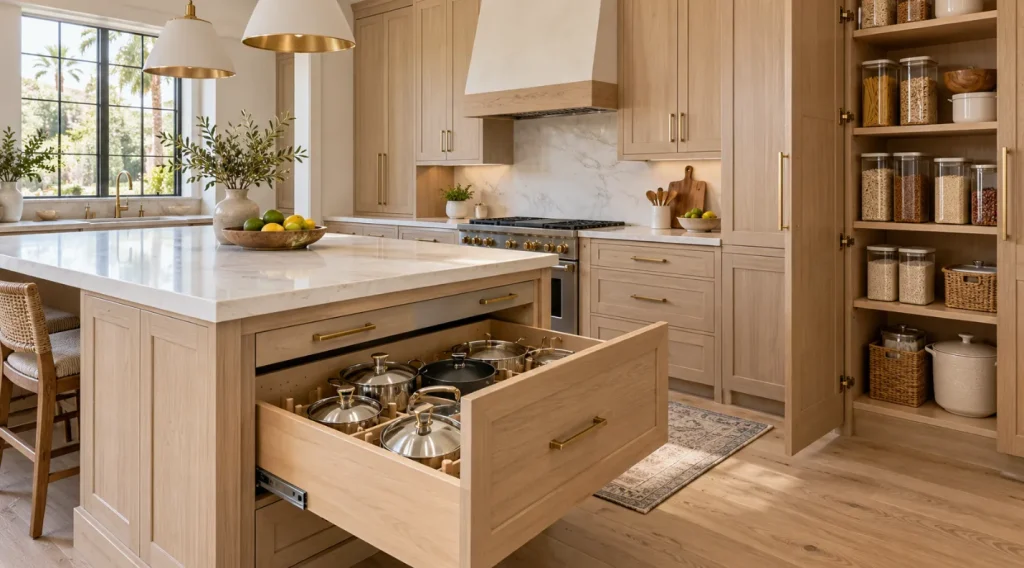
Drawers can make lower storage easier to see and reach. Shelves may suit certain tall items, serving pieces, or spaces where drawers are less practical.
Neither choice wins everywhere.
Tell your designer which items are heavy and what movements feel uncomfortable. Bending, reaching, and lifting deserve attention during accessible kitchen storage design.
For pullout cabinet storage planning, ask about usable space after the hardware and organizers are installed. Confirm load limits for the selected fittings too.
The useful question in kitchen storage planning is whether you can reach, lift, and return an item comfortably. Fitting it inside is only the first part.
What Should You Include in Pantry Storage Planning?
List the packages you buy regularly, including their sizes. Cereal boxes, flour containers, bottles, and bulk paper goods all take different amounts of room.
Look at how much you keep between shopping trips. A household shopping daily has different needs from one buying several weeks of supplies.
Adjustable shelves can help as habits change. Still, very deep shelves may make smaller items hard to see.
For food container storage solutions, count the containers and lids you actually use. A drawer designed around a tidy collection works differently from one holding every takeaway tub you have saved.
What Should You Measure Before Ordering Kitchen Cabinets?
Homeowners can collect useful starting measurements. Record room dimensions, windows, doors, ceiling height, and the locations of existing appliances and fixtures.
Note trim, door swings, and anything that blocks access. Take wide photos as well as close views of problem spots.
These notes support kitchen storage planning, but they are not fabrication drawings. Have the cabinetry team confirm site measurements and coordinate appliance, plumbing, and electrical requirements before production.
Your kitchen storage planning checklist should also include future changes. A larger refrigerator or different sink could affect nearby cabinets, even if you are keeping most of the layout.
FAQs
Should you measure every spoon and plate?
No. Count similar items and measure representative stacks. Focus on large, awkward, fragile, or heavy pieces that could affect drawer depth, shelf spacing, and access.
How much spare storage should you leave?
There is no single amount for every kitchen. Allow practical room for changing needs, but avoid adding cabinets without knowing what they will hold. Empty space can be useful too.
Should organizers be chosen before cabinets are built?
Discuss fitted organizers early. Inserts, pullouts, and lift systems can require specific dimensions or hardware. Some loose dividers can be added later, but check fit before buying them.
What kitchen storage mistakes should you avoid?
Avoid measuring only cabinet exteriors, forgetting handles, and placing heavy items where they are difficult to reach. Another common mistake is keeping storage habits that already frustrate you simply because they feel familiar.
Before finishing your kitchen storage planning, walk through an ordinary morning on paper. Imagine making coffee, packing lunch, and putting dishes away. Does each item have a sensible place? This quick check may reveal a missing drawer or an inconvenient shelf before those choices become part of your new kitchen for many years.
Bring Your Storage Needs to The French Refinery
You do not need a perfect drawing before asking for help. Bring your inventory, rough measurements, appliance information, and a few photos. Explain what works now and what gets in the way.
Contact The French Refinery to discuss your custom cabinetry project. A thoughtful starting list gives the conversation something practical to build on, right down to that awkward pot lid.


